🔍 Quick Summary
Most businesses treat record keeping as something to deal with at year-end.
But when it’s done properly, it gives you clarity, better decisions and far less stress.
With the right systems, it becomes simple and actually useful.

👋 Let’s be honest about record keeping
Most business owners didn’t start a business because they love bookkeeping.
And fair enough - it’s not exactly the fun part.
So what happens?
You keep records because you have to.
For your bookkeeper. For your accountant. For GST. For the IRD.
It becomes a box-ticking exercise.
Receipts get shoved in a drawer.
Bills sit in your inbox.
And everything gets dealt with … later.
We see this all the time - good businesses running off messy or incomplete information.
👉 The problem isn’t that you’re not doing it.
👉 The problem is that you’re not getting any real value from it.
💡 This is where having the right bookkeeping systems and support makes all the difference - not just at year-end, but all year round.
⚠️ Why traditional record keeping doesn’t work
This is what “normal” looks like for a lot of businesses:
Everything gets done at year-end (or close to it)
Printed copies of bills, statements, and documents get shoved into drawers or boxes out of sight
Important information is buried in emails — or sitting with someone else
Your bookkeeper or accountant is chasing you for missing details
Numbers are pulled together after the fact
And by the time it’s all done?
👉 The numbers are already out of date.
You’re looking backwards, not forwards.
Which means:
You’re making decisions based on old information
You don’t have a clear picture of your cashflow
Things feel reactive
And harder than they need to be.
💬 “We’ll deal with it later” turns into stress, guesswork and last-minute scrambling.
✅ What good record keeping actually looks like
Here’s the good news - it doesn’t need to be complicated.
Good record keeping is actually pretty simple:
It’s done regularly (weekly or monthly)
Everything is captured as it happens
It’s organised and easy to find
Your systems are connected (not scattered everywhere)
And importantly, it works with how you run your business.
💡 A quick NZ reminder
The IRD requires you to:
Keep business records for at least 7 years
Make sure they are accurate and accessible
👉 Digital records are absolutely fine - much easier to search and manage.
📊 Traditional vs better record keeping
Traditional Approach | Better Approach |
|---|---|
Done once a year (usually at year-end) | Updated regularly (weekly/monthly) |
Paper copies stored in drawers or boxes | Everything captured and stored digitally |
Reactive | Proactive |
Hard to find information | Easy access anytime |
Stressful and time-consuming | Controlled, clear and manageable |
💡 Why this matters more than you think
This is where things shift.
Record keeping isn’t just about compliance - it’s about clarity.
💰 You get clarity in your cashflow
You know:
What’s coming in
What’s going out
What’s due
No surprises.
📈 You make better decisions
Instead of guessing, you’re working off real numbers:
Hiring decisions
Pricing
Spending
😌 You reduce stress at tax time
No scrambling. No digging through emails.
Everything is already there.
🔍 You spot issues early
Cashflow dips
Costs creeping up
Margins tightening
👉 You can fix things early, not when it’s too late.
🔧 How to make this simple (without more work)
This is where most people think:
“That sounds good… but I don’t have time.”
The reality?
👉 It’s not about more effort - it’s about better systems.
📌 What this looks like in real life
Example: Handling a supplier invoice
Let’s say you receive a $120 bill for payment.
Here’s how it should flow:
📥 Invoice comes into your email
📸 Upload it to Xero Bills (or your document management tool of choice)
🤖 Key details extracted automatically
🔍 Review the draft bill and code it correctly
✅ Approve the bill for payment
📤 Add it to your payment batch
💬 Send remittance advice to the supplier
💻 Upload the batch to internet banking and authorise payment
💳 Match the transaction during reconciliation
🗂 Stored digitally for IRD👉
👉 Once your system is set up properly, this becomes quick, consistent, and easy to stay on top of.
💡 If you’re not sure your setup is working properly, getting help with Xero training and support can make a huge difference to how useful your numbers actually are.
Example: A simple weekly routine
🗓 Weekly (30–60 minutes):
Upload receipts and bills
Review and approve bills
Reconcile transactions by matching them to invoices, bills and receipts
👉 It’s not about spending hours on admin — it’s about staying on top of it, so things don’t pile up.
🛠️ The tools that make this easier
You don’t need anything complicated - just the right setup.
✔️ Xero
Your central system for tracking everything.
👉 If you’re only using part of Xero (or not using it properly), getting the right Xero setup, training and support can completely change how your business runs.
✔️ Hubdoc
A simple tool for capturing and storing bills and receipts directly into Xero — and often already included in your Xero subscription, depending on your Xero plan.
➕ Other paid tools (depending on your business)
Dext - Captures receipts and invoices as they come in, reducing manual data entry and keeping everything in one place.
EzzyBills - Automates data entry for bills and invoices, saving time on processing
Receipt Stash - A lightweight option for storing and organising receipts
🔧 Industry-specific tools
Lightspeed - Point-of-sale system for retail businesses
Cin7 Core - Inventory management for product-based businesses
Tradify - Job management for trades and service-based businesses
👉 For trades or job-based businesses, tools like Tradify can integrate with Xero and streamline everything from quoting through to invoicing.
👉 For retail businesses, Lightspeed integrates with Xero to keep your daily sales and stock levels aligned.
👉 For e-commerce or product-based businesses, Cin7 Core integrates with Xero to help you manage sales by multiple channels, inventory across multiple sites and supplier data in one place.
💡 The goal isn’t to use all of them - it’s to choose the right tools that work together and fit your business.
🤝 How we help at Conduit
We don’t just “do the books.”
We help you:
Set up systems that actually work
Keep everything up to date
Make sense of your numbers
Stay in control of your business
👉 Whether you need ongoing bookkeeping support or help setting up your systems, the goal is always the same - clarity and confidence in your numbers.
👉 Because good systems turn bookkeeping from:
❌ A chore
into
✅ Something genuinely useful
🔑 The key ideas to take away
Record keeping should give you clarity — not just keep you compliant
Consistency beats catching up every time
The right systems take the stress out of it
Real-time numbers lead to better, more confident decisions
🔒 The core message
You’re already doing the work to keep your records up to date.
👉 The difference is having systems in place so that work actually gives you clarity — not just compliance.
🧠 What this really comes down to
When your records are clear and up to date:
👉 Your numbers stop being something you avoid
👉 And start becoming something you rely on to make decisions
👣 Where to from here?
If your record keeping feels messy, behind, or harder than it should be — that’s completely normal.
Most businesses start there.
But it doesn’t have to stay that way.
📣 Need a hand?
If you would like one of the team to review your Xero setup or make sure your systems are ready for the new financial year 👉 book a discovery meeting with Rachel.
Simple systems. Clear numbers. Less stress.
✍️ About the Author
Rachel Paterson is the Chief Chaos Breaker at Conduit Business Solutions, helping New Zealand business owners simplify their bookkeeping, financial systems and day-to-day processes.
With more than 35 years of experience across media, training, insurance, telecommunications and small business operations, Rachel combines practical know-how with a friendly, straight-talking approach. As a Xero Certified Professional and Xero Platinum Partner, she focuses on turning messy numbers and disconnected systems into clear, useful information business owners can act on.
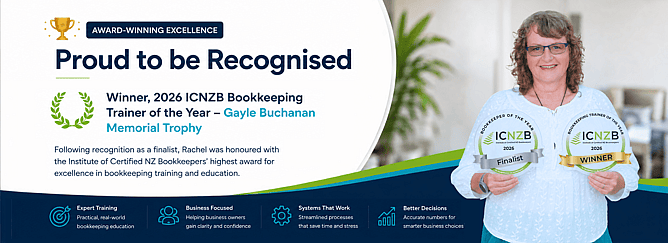
In 2026, Rachel was named a finalist in two ICNZB Excellence Award categories and went on to win Bookkeeping Trainer of the Year, recognising her commitment to practical, accessible training for New Zealand businesses.
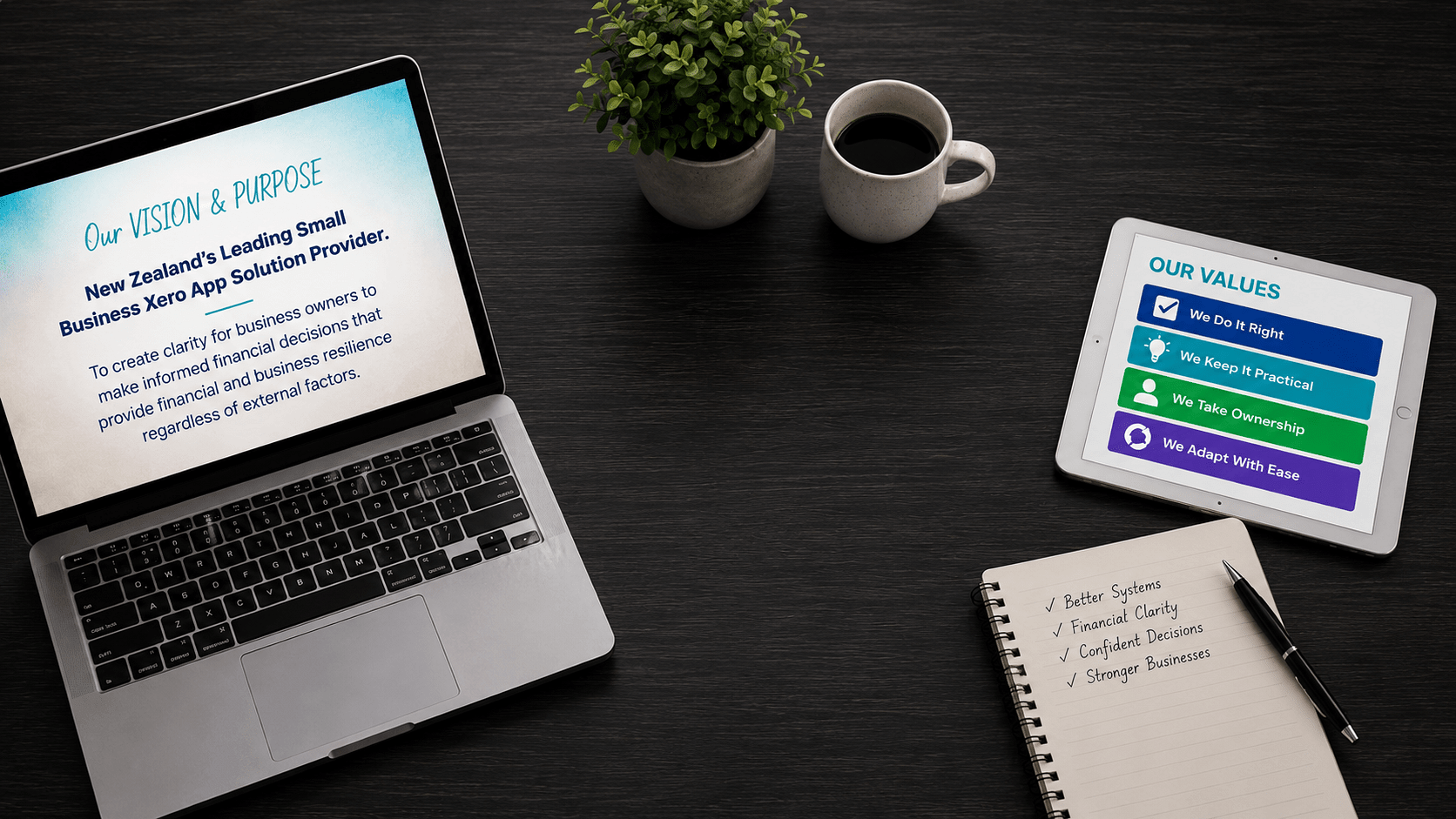
Conduit supports trades, retail, e-commerce and service-based businesses across New Zealand with bookkeeping, payroll, Xero training, reporting and app advice. The goal is simple: help business owners feel clearer, more confident and more in control.