Not all business advice is created equal. Learn how to know who to trust, when to speak to a bookkeeper, accountant, business advisor or coach and why context matters.
Quick Summary
Business advice has never been easier to find. The hard part is knowing whether it actually applies to your business.
The right person depends on the question. A bookkeeper, accountant, lawyer, business coach or software advisor may all be useful - but for very different reasons.
Good advice starts with questions, takes your numbers and circumstances into account and gives you a practical next step - not a one-size-fits-all answer.

“Someone told me I should...”
One of the conversations I have regularly with business owners starts with exactly those words.
“Someone told me I should hire someone.”
“Someone told me I should put my prices up.”
“Someone told me I should change software.”
“Someone told me I should borrow money and grow faster.”
Sometimes the advice is spot on. Sometimes it’s outdated. And sometimes it worked brilliantly for the person giving it and would cause chaos in someone else’s business.
The advice is usually well meant. The problem is that the next question often gets missed:
Does that advice actually fit your business?
That is the part that matters. Business advice has never been easier to find. Your accountant says one thing, someone at networking says another, Google gives you a third answer and now AI has chimed in with a fourth.
The real skill is not finding advice. It is knowing what to do with it.
⭐The honest answer is often: “It depends”
You probably don’t love hearing “it depends” from me. It can sound vague or unhelpful. But it’s usually the most honest place to start.
Should you hire another person? It depends.
Should you increase your prices? It depends.
Should you buy new equipment? It depends.
Should you move to a new app? It depends.
The useful part is understanding what it depends on.
Your cashflow, pricing, workload, margins, industry, systems, goals and appetite for risk all matter. Two business owners can ask exactly the same question and need completely different answers.
That’s why one-size-fits-all advice can be risky - it skips the part where someone actually gets to know your business.
💡Good advice usually starts with questions, not answers
One thing I have learned over the years is that the best advisors rarely jump straight to a solution. They ask questions first.
They want to know what problem you are trying to solve. They want to understand what has already been tried. If money is involved, they want to see the numbers. If the advice affects your team or customers, they want to understand how the business works day to day.
That doesn’t mean every decision needs a six-month strategy project. Sometimes you just need a clear answer and a sensible next step - one that’s grounded in reality, not guesswork.
The best advice is not necessarily the loudest, cheapest or what you want to hear. It is the advice that makes sense for your business right now.
🧭Where business owners usually go for advice?
Most business owners build an informal advice circle over time. That circle might include family, other business owners, an accountant, a bookkeeper, a lawyer, a coach, a mentor and people online. Every one of those sources can be useful, but the key is knowing what they are useful for.
Friends, family and other business owners
Sometimes you need to talk to someone who understands the pressure of running a business. Other business owners can be brilliant for sharing experience, testing an idea or reminding you that the hard parts are normal.
The watch-out is simple: their business is not your business. Their margins, team, debt, customers and goals may be completely different. Listen to the experience, but do not copy and paste the decision.
Facebook groups, forums, podcasts and online content
Online communities can be useful for collecting ideas. They are great for questions such as which tools people use, what a particular supplier is like or how others manage a common operational issue.
They become riskier when the topic involves tax, payroll, employment law, contracts, lending or significant financial decisions. We’ve probably all seen one question about claiming something as a business expense in a Facebook business group attract a dozen confident answers that contradict each other. Confidence is not the same as accuracy.
Online advice can still be useful for helping you frame the question and understand what you need to ask. Just don’t let it make the decision for you.
AI tools
AI is brilliant for helping you think, but it’s not brilliant at knowing the conversations you’ve already had with your other advisors.
AI can be useful for brainstorming, simplifying information, creating checklists and helping you organise your thoughts before a meeting. It can turn a messy idea into a clearer plan and point out questions you may not have considered.
And AI only knows what you tell it.
It does not automatically know whether your Xero file is up to date, whether your cashflow can support another wage or whether your pricing is already too tight. It cannot see the conversations you have already had with your accountant about tax planning, the pressure your team is under or the small details that may completely change the answer.
AI can also “hallucinate”. That’s when it gives you information that sounds completely convincing but is inaccurate or even made up. It could be an outdated tax rule, the wrong employment requirement or a source that doesn’t actually exist. The tricky part is that AI can sound just as confident when it’s wrong as when it’s right.
And while AI can explain general tax, legal or employment concepts, that does not mean the answer is current, complete or right for your situation. Important facts still need to be checked, particularly when they affect your money, people, tax position or legal obligations.
Use AI to think, prepare better questions and explore options. It can help you get closer to the right question, and for important decisions, it’s best used as one input alongside advice from someone who understands your actual business.
Accountants and tax agents
Your accountant or tax agent is usually the right person for tax planning, annual accounts, business structures, compliance and questions about how something needs to be treated for tax purposes.
The gap can appear when the relationship is mostly annual. Business decisions happen all year, and the warning signs often show up long before the annual accounts are prepared.
If you only speak to your accountant once a year, make sure you still have someone helping you understand what is happening in between.
Bookkeepers and systems advisors
A good bookkeeper is often much closer to the day-to-day movement of money and information. They see unpaid invoices, supplier pressure, payroll issues, coding problems, GST surprises and systems that are creating extra work.
That closeness matters because a problem spotted early is usually easier and cheaper to fix. Good bookkeeping support is much more than data entry. It helps turn your numbers into useful information while there is still time to act on it.
Business coaches, mentors and advisors
A business coach, mentor or advisor can be valuable when you need perspective, accountability, planning support or help thinking through growth and leadership decisions.
The best ones do not simply tell you to scale, hire or invest. They connect the big idea to the practical reality. Strategy is useful. Strategy supported by reliable numbers is much stronger.
Lawyers and specialist advisors
Some questions need to go straight to a specialist. Contracts, disputes, leases, shareholder matters, employment agreements, buying or selling a business and anything carrying legal risk need proper legal advice.
The same applies to lending, insurance, HR and other specialist areas. Your bookkeeper, coach or friend may have an opinion, but that does not make them the right person to advise you.
🟢What good advice looks like in real life?
Advice becomes useful when it moves from a broad statement to a properly considered decision. Here’s a real one, followed by three common examples.
One long-time client, a growing trades business, came to us needing help with budgets and tax questions before opening a second branch in a new region. Rather than guess, we pointed him to an accountant suited to his business. That’s not us dodging the question. That’s making sure the advice actually fits.
“I’m flat out. I think I need another staff member.”
Maybe you do.
Or maybe the real issue is a workflow that has become clunky. Maybe too much work is being repeated. Maybe your pricing isn’t covering the time involved. Maybe the owner is still approving every small decision and has become the bottleneck.
Before hiring, look at whether the work is consistent, whether cashflow can support wages, what the person will actually do and whether your systems are ready for another team member.
Hiring might be the answer. And before making it the first answer, it’s worth working out what’s actually causing the pressure.
“This new software looks amazing. Should we switch?”
It depends on the problem you are trying to solve.
A polished demo can make any app look like the missing piece. And changing software creates work. Your data needs to be cleaned up and migrated, processes may need to be rebuilt, people need training and integrations need to be checked.
I’ve stopped a point-of-sale conversion at the eleventh hour after we discovered the new system couldn’t integrate with the EFTPOS terminal the way the business needed it to. It was a small detail that could easily have been missed and it would have created a very real problem once the new system went live.
That’s why the right questions are practical: What isn’t working now? Does the new system integrate with the other tools you rely on? Who will own the setup? Will the team use it properly? Will it make the business simpler or just different?
The right software can be brilliant. The wrong setup can create more chaos than the old system ever did.
“Should I buy the equipment now?”
Maybe the equipment will save time, increase capacity or improve the quality of the work. Maybe it will simply add another repayment to a business that is already tight on cash.
Good advice looks at the purchase price, finance costs, maintenance, expected return, how often the equipment will be used and whether it solves the real constraint in the business.
Sometimes the answer is yes. Sometimes it is not yet. Sometimes the better move is fixing the process first.
🚩A few red flags
You don’t need to become suspicious of everyone offering an opinion. Most advice is well meant. There are a few red flags worth watching for before you act on it.
The answer comes before enough questions have been asked.
The advice sounds like a magic fix with no trade-offs.
A financial decision is being recommended without looking at the numbers.
The advice is based mainly on what worked for someone else.
You’re being pushed to act quickly without understanding the risks.
You leave the conversation feeling more confused rather than clearer.
Good advice won’t make running a business effortless. It can make the next decision clearer, more informed and easier to act on.
👍The right person depends on the question
There is no single person who can advise you on everything - and that’s a good thing.
Legal questions belong with a lawyer. Tax treatment or business structure will usually sit with your accountant or tax agent. Day-to-day numbers, cashflow and systems may sit closer to your bookkeeper or systems advisor. Leadership, planning and growth may be better suited to your business coach or mentor.
The strongest businesses are not built by one person knowing everything. They are built by having the right people around the table and knowing when to ask each one.
🏆How we approach advice at Conduit
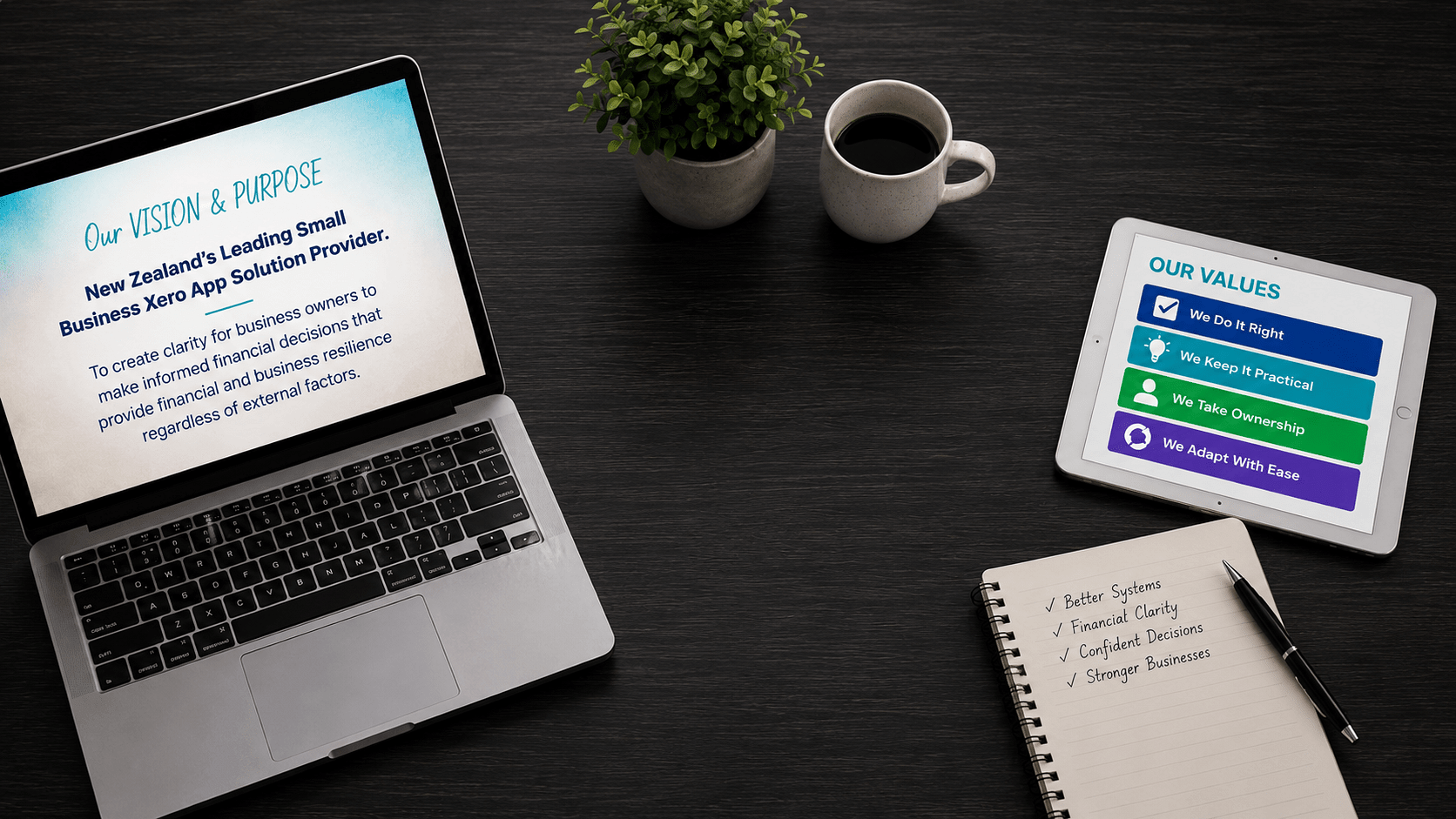
At Conduit, we don’t pretend to have every answer. And we don’t expect one person to know everything either. That’s why we have our own business coach and accountant. We know the value of having the right people around the table because we do it in our own business too.
If you need legal advice, we’ll tell you to speak to a lawyer. If a tax question is better answered by your accountant, we’ll say so. If you’re dealing with an employment or people issue, we’ll point you towards the right HR or employment specialist. Knowing when to bring in the right specialist is part of giving good support.
Where we can help is understanding what your numbers are telling you and improving the way information flows through your business. That might mean sorting out a messy Xero setup, strengthening your bookkeeping or choosing systems that actually fit the way you work.
We ask questions first because the same answer doesn’t suit every business. Our job isn’t to add more noise. It’s to help you understand what’s happening, see your options more clearly and make a practical decision with confidence.
🧠Before you act on the next piece of advice
Pause and ask yourself:
Does this person understand my actual situation?
Have they asked enough questions?
Is the advice based on reliable numbers or assumptions?
Are they the right person for this particular question?
What are the risks and trade-offs?
Am I solving the real problem, or just the most obvious symptom?
Do I understand the next step?
Those questions will not remove every difficult decision. They will help you avoid acting on advice that was never designed for your business in the first place.
What this really comes down to
You do not need a hundred opinions. You need the right support at the right time.
The best business advice starts with understanding your business - the numbers, the context and the problem you are actually trying to solve. From there, the next step usually becomes much clearer.
💬Need a hand cutting through the noise?
If you would like the Conduit team to review your Xero setup, talk through your systems or help you understand what your numbers are telling you, book a free discovery meeting with Rachel. We’ll talk through what’s going on and help you work out the most practical next step.
Simple systems. Clear numbers. Better decisions.
✍️About the Author
Rachel Paterson is the Chief Chaos Breaker at Conduit Business Solutions, helping New Zealand business owners simplify their bookkeeping, financial systems and day-to-day processes.
With more than 35 years of experience across media, training, insurance, telecommunications and small business operations, Rachel combines practical know-how with a friendly, straight-talking approach. As a Xero Certified Professional and Xero Platinum Partner, she focuses on turning messy numbers and disconnected systems into clear, useful information business owners can act on.
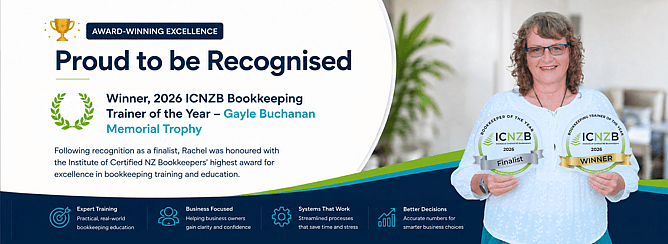
In 2026, Rachel was named a finalist in two ICNZB Excellence Award categories and went on to win Bookkeeping Trainer of the Year, recognising her commitment to practical, accessible training for New Zealand businesses.
Conduit supports trades, retail, e-commerce and service-based businesses across New Zealand with bookkeeping, payroll, Xero training, reporting and app advice. The goal is simple: help business owners feel clearer, more confident and more in control.