
Most NZ small business owners don’t realise there’s a problem until:
GST lands
cashflow gets tight
payroll is due
or the accountant tells them profit was nowhere near what they expected.
Checking your bank balance alone does not tell you whether your business is actually healthy.
A lot of small businesses are busy but still struggling financially behind the scenes.
That’s why monthly reporting matters.
Not because accountants and bookkeepers love spreadsheets 😅
Because the right reports help business owners:
spot problems earlier
reduce stress
improve cashflow
and make better decisions before things become expensive.
Why Monthly Business Reporting Matters More Than EOFY
A lot of NZ small business owners only properly look at their numbers at EOFY.
That usually means:
discovering problems 11 months too late
getting surprised by tax bills
realising business cashflow is tighter than expected
reacting instead of planning
Monthly business reporting is not about becoming an accountant. It is about understanding what’s really happening in your small business.
The small businesses that usually stay calmer and more in control are the ones checking the right numbers before problems become expensive.
Good reporting helps small business owners:
spot business cashflow pressure earlier
make better decisions
avoid surprises
understand where profit is disappearing
Understand the numbers - not just tick the boxes.
1. Profit & Loss Report: Is the Business Actually Making Money?
This report tells you whether your small business is actually making money after expenses are paid.
And this is where reality usually hits for small business owners.

You can have:
plenty of work
money coming in
growing sales
…while profit quietly disappears through rising costs, poor pricing, wages or shrinking margins.
Look for:
expenses creeping up
margins tightening
revenue increasing without profit improving
expenses that are quietly eating margin
If revenue is growing but profit isn’t, something’s leaking.
2. Cashflow Report: Why Profitable Businesses Still Run Out of Cash
This is where a lot of good NZ small businesses get caught out.
A small business can look profitable on paper and still struggle to pay bills.
Because cashflow is all about timing.
You might be waiting on customers to pay while GST, wages, suppliers and income tax are all due at once.
Our taxes and leave provisions spreadsheet can help you set money aside before GST, tax and leave payments catch you out.
Your business cashflow report helps you spot pressure before things become urgent.
It helps answer:
Can we comfortably cover wages next week or next month?
Is the next GST Return going to empty our bank account?
Are customers paying too slowly? Which ones? How slow?
Are we growing too fast?
Most business stress comes from surprises. Good business cashflow reporting helps you spot pressure earlier.
3. Accounts Receivable Report: Who Still Owes You Money?
This is where many business owners spot who still owes money and how many days overdue those invoices are.
A lot of business owners avoid looking at this report because they hate chasing people.
But unpaid invoices create cashflow pressure fast in small businesses💸.
The longer invoices sit unpaid, the harder they usually become to collect.
Unless your business is a bank or a money lender, you shouldn’t be funding other people’s businesses.
Each month, check for:
invoices overdue more than 30 days
repeat late payers
large unpaid balances sitting too long
If invoicing delays are becoming a regular issue, our blog on e-invoicing explains how NZ businesses are speeding up payments and reducing admin.
E-invoicing is not just emailing a PDF or sharing a payment link. It sends invoice details directly into your customer’s accounting software, which helps remove the classic “I never received the invoice” excuse.
TIP: Adding payment services to your Xero invoices can help speed up payments significantly.
Stripe allows customers to pay instantly by debit or credit card.
GoCardless simplifies direct debits.
PayPal can work well for international clients.
When you compare the small transaction costs against the time spent chasing overdue invoices, it is usually well worth it.
4. Accounts Payable Report: What Bills Are Coming Up?
This helps track what bills are coming up and what still needs to be paid.
It helps you:
prepare for upcoming expenses
avoid cash crunches
manage supplier relationships better
reduce surprises
Business stress often happens when too many bills land at once without enough cashflow planning 😵
5. Balance Sheet: The Report Most Business Owners Ignore
Most business owners avoid the Balance Sheet because it feels technical.
But this is often where hidden problems sit quietly in the background.
Things like:
GST building up that has not been set aside yet
income tax owing that could create pressure later
taking more money out of the business than the business can comfortably afford
loans slowly increasing over time
not enough cash reserves for quieter months or unexpected costs
annual leave building up that still needs to be paid eventually when someone leaves
These issues often build quietly in the background before cashflow problems start showing up.
The Balance Sheet helps business owners see pressure building before it becomes a crisis.
Our taxes and leave provisions spreadsheet can help make these future obligations more visible month-to-month.
6. Payroll & Leave Liability: The EOFY Surprise Nobody Likes
This catches a lot of NZ businesses off guard.
Annual leave builds quietly in the background. Then EOFY arrives and suddenly the amount owed to employees is much higher than expected 😬
This money still belongs to your employees — even if it is sitting in the business bank account. Tracking leave provisions monthly helps you avoid treating that money like available cash. If it has not been planned for properly, your business can look more profitable than it really is.
Monthly payroll reporting helps you stay ahead of:
leave balances
payroll costs
KiwiSaver obligations
payroll errors
Payroll systems like PayHero help - but regularly reviewing the numbers is what prevents expensive payroll surprises.
This also ties closely into strong record-keeping systems and tidy payroll processes throughout the year.
What We Recommend for NZ Small Business Owners
Each month, we recommend:
✔ Review Profit & Loss
✔ Review cashflow
✔ Review overdue invoices
✔ Check upcoming bills
✔ Monitor leave liabilities
Even 30 minutes each month reviewing the right reports can dramatically improve business visibility and decision-making.
Final Thoughts: Better Reports Create Better Decisions
Good financial clarity is not about turning business owners into accountants and bookkeepers.
It is about understanding problems early enough to do something about them.
Because when business owners have clearer visibility into:
cashflow
profitability
upcoming costs
financial pressure points;
they make calmer, more confident decisions.
At Conduit Business Solutions, we help NZ businesses build systems that improve reporting clarity, simplify processes and reduce financial stress before problems become expensive.
Whether it’s bookkeeping support, payroll systems, Xero setup or helping business owners better understand their numbers - our goal is always the same:
Less chaos. Better financial visibility. Fewer surprises.
👉 Book a discovery meeting with Rachel
Need a simple way to track what needs to be set aside? Download our taxes and leave provisions spreadsheet to help plan for GST, tax and leave payments before they catch you out.
Frequently Asked Questions
What financial reports should small business owners review monthly?
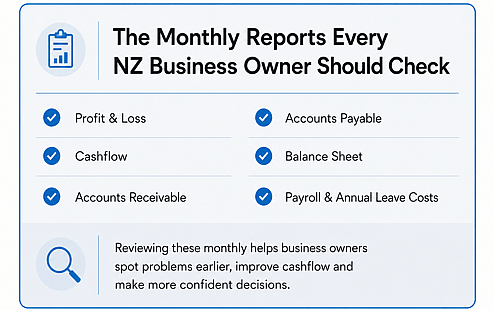
Small business owners should regularly review:
Profit & Loss
Cashflow
Accounts Receivable
Accounts Payable
Balance Sheet
Payroll and Annual Leave Costs
What’s the difference between profit and cashflow?
Profit shows whether your business made money.
Cashflow shows whether cash is actually available in the bank.
A profitable business can still run out of cash.
Which financial reports are most important?
The most useful financial reports for small business owners are:
Profit & Loss
Balance Sheet
Aged Receivables
Aged Payables
Cash Summary
How often should I review business reports?
At minimum, monthly.
Understanding the numbers regularly helps identify issues early and improves business decision-making.
Why do NZ small businesses struggle with cashflow?
Common reasons include:
late-paying customers
poor financial clarity
unexpected GST or tax bills
seasonal fluctuations
lack of financial reporting systems
✍️About the Author
Rachel Paterson is the Chief Chaos Breaker at Conduit Business Solutions, helping New Zealand business owners simplify their bookkeeping, financial systems and day-to-day processes.
With more than 35 years of experience across media, training, insurance, telecommunications and small business operations, Rachel combines practical know-how with a friendly, straight-talking approach. As a Xero Certified Professional and Xero Platinum Partner, she focuses on turning messy numbers and disconnected systems into clear, useful information business owners can act on.
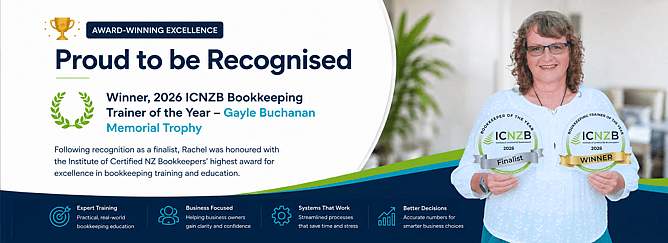
In 2026, Rachel was named a finalist in two ICNZB Excellence Award categories and went on to win Bookkeeping Trainer of the Year, recognising her commitment to practical, accessible training for New Zealand businesses.
Conduit supports trades, retail, e-commerce and service-based businesses across New Zealand with bookkeeping, payroll, Xero training, reporting and app advice. The goal is simple: help business owners feel clearer, more confident and more in control.